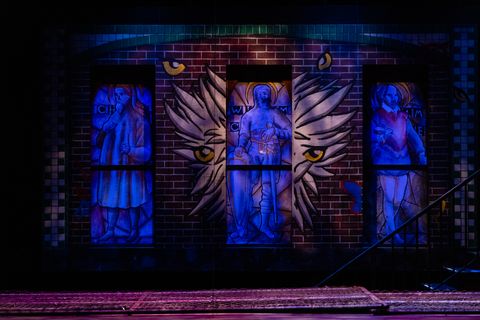
Photo Credit: Laura Lyon
As a Technical Director I tend to approach the process through a lense of efficiency. Efficiency of time. Efficiency of budget. Efficiency of labor. I find that this usually helps me better serve the show. I do this by thinking "fouth dimensionally" and asking myself questions such as:
The answer to each question may not always be "yes", but when most of them are "yes" I find that I am making better use of the crew and thus time and money. When time allows and it is appropriate for the scope of the project, I tend to draft and model in 3D. This helps consolidate the editing process by only having to edit the object instead of multiple individual views. This also allows me to communicate potential sightline or other challenges to directors and designers who may "have to see it." If I can solve a challenge in 3D before we get to physical objects I can save my crew from having to do or move things multiple times.
Photo Credit: Laura Lyon
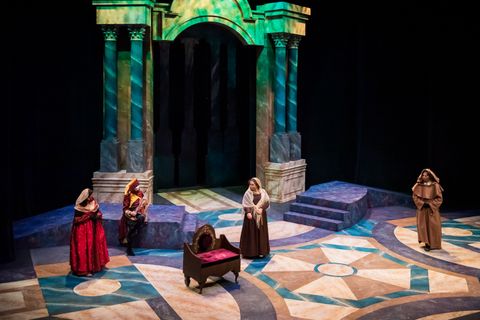
Photo Credit: Bryce Womeldurf
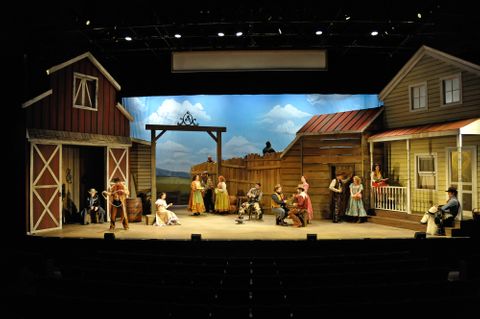
Photo Credit: unknown